Artrya Adds Cone Health to U.S. Roster, Notching Third Major Win for Salix® Platform

In a timely pre-Christmas announcement, ASX-listed medtech player Artrya (ASX: AYA) has unveiled its third U.S. commercial customer, signing a five-year software agreement with North Carolina-based Cone Health. The deal rounds out a trio of American “foundation partners” who have now transitioned from pilot collaborators to paying clients, marking a key milestone in Artrya’s U.S. expansion.
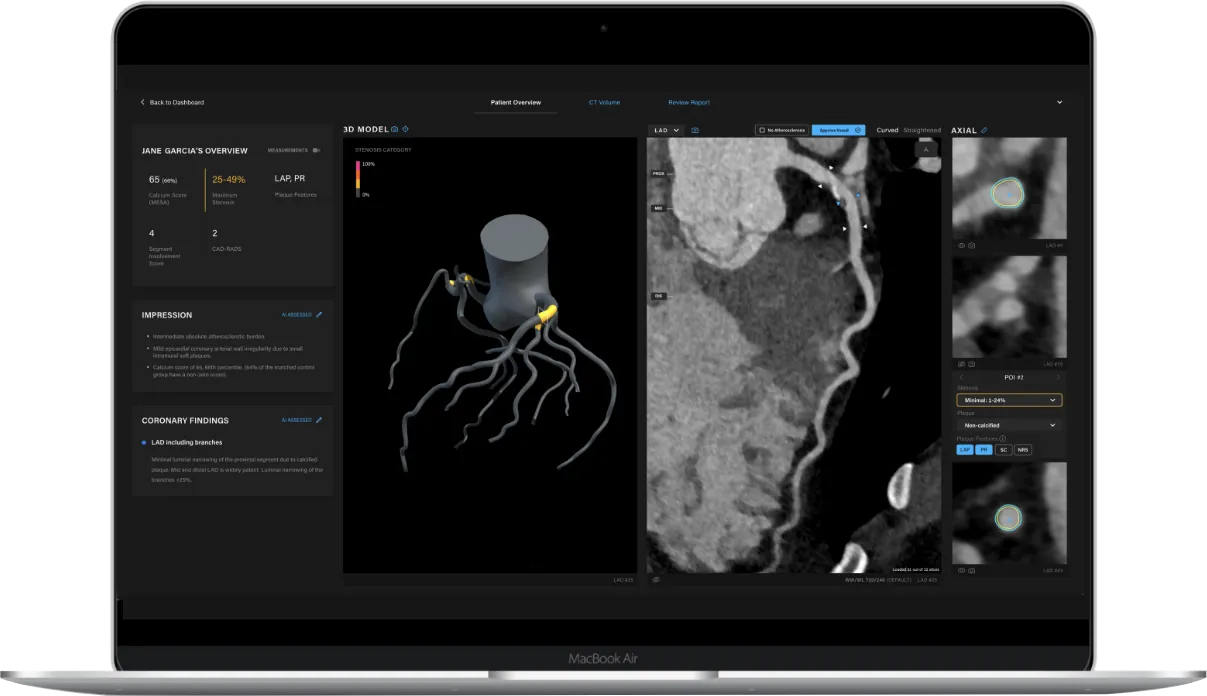
The agreement, worth a minimum of US$450,000 over its term, grants Cone Health access to Artrya’s Salix® Coronary Anatomy software, which uses AI to assess coronary artery disease in near real-time. A separate revenue stream will also kick in from use of the Salix® Coronary Plaque module, which attracts fee-per-scan charges and benefits from U.S. reimbursement eligibility under a Category 1 CPT code.
Cone Health - a not-for-profit health system comprising five hospitals and over 120 physician practices - first partnered with Artrya in mid-2024 in a test integration phase. That groundwork involved technical assessments of how Salix® interacts with Cone’s picture archiving and communication systems (PACS) and electronic medical records (EMR). With those boxes ticked, Salix® will now be rolled out across Cone’s entire network, integrated into routine clinical workflows.
The Salix® software is pitched as a solution to streamline and accelerate the diagnosis of coronary artery disease. According to Dr Wesley O’Neal, Medical Director of Cardiac CT and Nuclear Cardiology at Cone Health, the system provides “accurate, point-of-care interpretation of CCTA scans within minutes,” enabling “faster, more precise diagnoses”.
Echoing this endorsement, Cone’s Executive Director of Heart and Vascular Services, Sheryl Booth, noted that Salix® will reduce diagnostic variability and improve care delivery across the network. She also praised Artrya’s onboarding support team, which is based in Atlanta and was established to ensure U.S. clients are handheld through the implementation process.
From Artrya’s perspective, converting all three U.S. foundation partners to commercial clients in a single calendar year is more than just a sales victory. It validates the company’s collaborative model of embedding its tech into hospital systems via joint development, rather than cold-selling off the shelf.
“We have now successfully converted all three of our foundation partners to commercial customers, which highlights the benefits of our partner collaborations to validate the clinical and commercial use of Salix®,” said CEO and co-founder John Konstantopoulos. “This also shows our growing commercial momentum as we move into 2026”.
On paper, the recurring revenue structure provides a degree of predictability: fixed monthly fees for the Coronary Anatomy platform, and usage-based revenue for the plaque detection module. Importantly, the latter is already eligible for reimbursement in the U.S., which removes a common hurdle for medtech commercialisation in that market.
While the full financial details remain commercial-in-confidence, Artrya disclosed that the agreement includes standard SaaS terms, including 30-day termination clauses with no cancellation penalties, as well as data security and upgrade provisions.
Artrya is now eyeing 2026 as the year to scale within its existing U.S. customer base, with its Atlanta-based Customer Success team playing a central role in that strategy. After all, in health tech, success isn’t just about selling the software - it’s about embedding it into workflows, achieving clinical buy-in, and generating those crucial recurring revenue streams.
With three U.S. clients onboard, Artrya has shown it can play in the competitive North American market. The challenge now is turning early traction into sustained growth. Investors will be watching closely to see if the company can continue this momentum and perhaps convert more test sites into paying customers in the new year.