Drones, Jammers and Valuations: Bell Potter Declares 2026 the Year of the UAV

If there was still any doubt that drones had reshaped the battlefield - and the boardroom - Bell Potter Securities’ Drone Report puts it to rest. Published on 21 January 2026 by analysts Baxter Kirk and Ritesh Varma, the 9-page report lays out the bullish case for unmanned aerial systems (UAS) and their countermeasures (C-UAS), positioning the ASX as a surprisingly rich source of exposure.
Driven by new legislation, surging defence budgets and real-time battlefield feedback - most visibly in Ukraine - Bell Potter sees 2026 as an inflection year for drone and counter-drone markets globally. Drones now account for 70-80% of daily combat losses in the Ukrainian conflict. That has tipped procurement scales from future-looking experiments to urgent acquisition programs.
The C-UAS Playbook
The legislative lever, at least in the US, has been firmly pulled. The Safer Skies Act, passed in December 2025, permits public safety agencies - including law enforcement and correctional facilities - to disable drones deemed a credible threat. This is a structural change. For the first time, state and local governments can procure and deploy C-UAS tools, unlocking an estimated 12% of the addressable market for non-kinetic countermeasures such as RF jammers.

DroneShield RFPatrol Mk2 (supplied)
DroneShield (ASX:DRO)’s DroneGun Mk4 and RFPatrol Mk2 units are already deployed in such scenarios. In fact, the report notes the US Air Force continues to single out DroneShield’s gear as the only proven option that meets its handheld requirements.
Directed energy weapons (DEWs) are another area of focus, where Electro Optic Systems (ASX:EOS) is gaining traction, having recently delivered its 100kW “Apollo” system into Dutch and Korean defence programs. Europe, meanwhile, is forging ahead with its “Drone Defence Initiative,” with Poland’s €2.5 billion “East Shield” and the Netherlands both identified as early movers.
Amid this surge, the value of adaptable, component-based supply chains has become clear. Bell Potter doesn’t highlight unlisted suppliers, but it notes that scalable defence engineering is increasingly a function of distributed, low-capex manufacturing. That’s a subtle nod to firms like KTEK Systems, a Tier-2 provider of UAV sub-assemblies and ruggedised airframes, which operates under an asset-light “Cordless Factory” model across Israel, the EU, and soon Australia.
Drones in Demand - Fast
On the offensive side of the ledger, the US Department of War is now targeting production of 340,000 small drones over two years, with unit prices capped at around US$5,000. This high-volume, low-cost procurement plan favours agile manufacturers - especially those already embedded in Tier-1 OEM programs.
KTEK, for instance, is a known supplier to UVision, whose Hero-120 loitering munition secured a US$982 million multi-year IDIQ contract from the US Army in October 2025. KTEK produces the composite fuselage and sub-systems for that platform - a position that could provide tailwinds without requiring direct contract attribution.
That’s the model. Support the primes, stay in the background, and scale as they scale.
Commercial Flight Path Also Clears
It’s not all battlefield firepower. The commercial drone market is quietly gearing up for a breakout, pending the long-awaited FAA Part 108 reform, which is expected to permit scalable Beyond Visual Line of Sight (BVLOS) operations. Bell Potter flags this as a potential game-changer for Elsight (ASX:ELS), whose Halo platform has already been validated for public safety use.
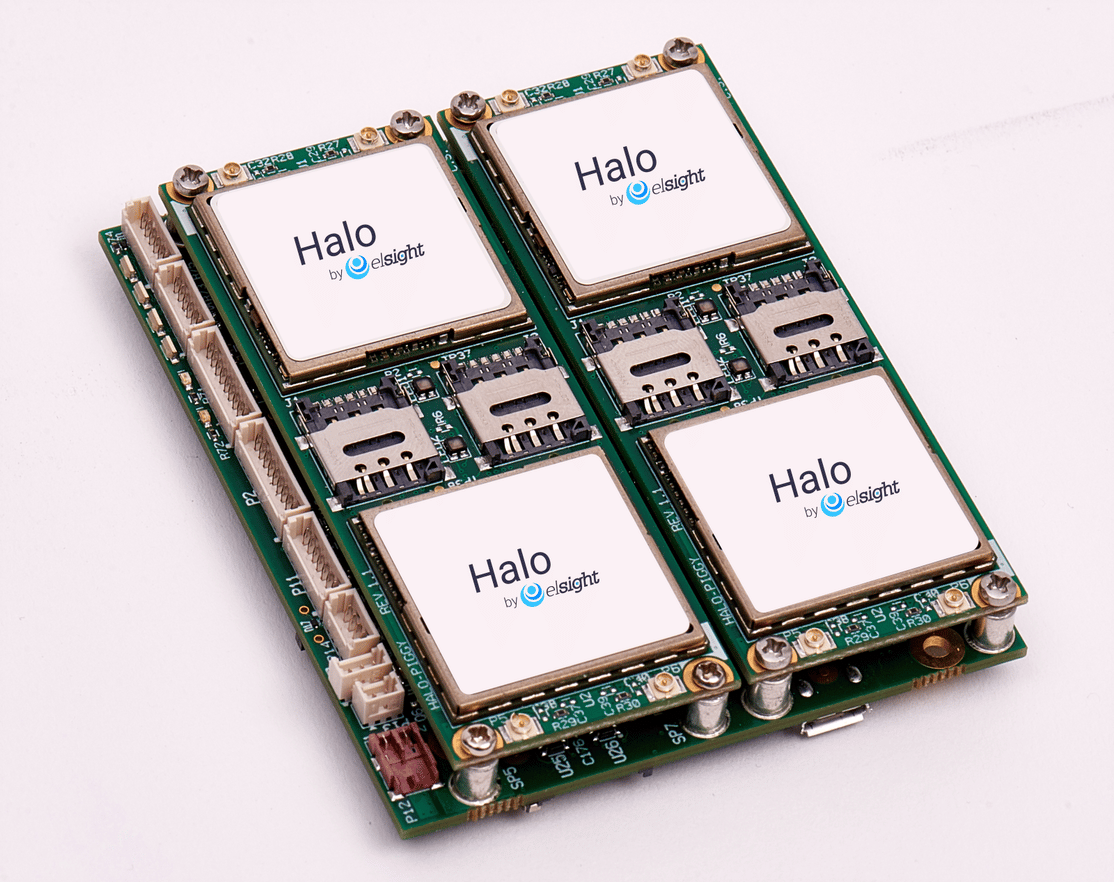
The report also notes the inflection point at Australian mine sites, where autonomous deployments are growing - RocketDNA (not rated) is rolling out over 20 xBot units. It’s another sign that the demand curve for smart UAV systems is steepening not just for platforms, but for the electromechanical and connectivity subsystems beneath them.
KTEK, which also supports ISR and C4I ground infrastructure projects via ruggedised racks, enclosures, and power distribution modules, stands quietly aligned with these commercial and dual-use trends.
Valuations and Market Positioning
One of the more compelling parts of the Bell Potter analysis lies in its relative valuation work. It compares ASX-listed drone and counter-drone companies with global peers like AeroVironment (NASDAQ:AVAV) and Kratos (KTOS), and finds a significant multiple discount. ASX names like DRO, ELS and EOS are trading at sub-30x FY28 EV/EBITDA, while their US peers are fetching multiples of 50x or more.
This pricing gap, in Bell Potter’s view, may present an opportunity - particularly for investors looking for exposure to a sector on the verge of structural expansion. The research note rates DRO, ELS, and EOS as “Buy” and flags a catalyst-rich six months ahead.
That optimism may also extend to IPO candidates orbiting the listed space. KTEK, for instance, has already completed an oversubscribed seed round backed by Regal Emerging Companies Fund and is planning an ASX listing later this year.
Risks Still Apply
Despite the tailwinds, Bell Potter isn’t blind to risk. The report highlights execution, regulatory approvals, R&D competitiveness and geopolitical stability as key pressure points. It also underscores the importance of diversifying revenue bases - an area where some ASX players still lean heavily on single customer relationships.
That said, for companies with proven capability, scalable production models, and Tier-1 integration credentials, the risk-reward trade-off in 2026 appears increasingly skewed to the upside.
Where It Leaves Investors
If The Drone Report is correct, drones are moving from the tactical edge to the strategic core of global defence policy - and the ASX is well positioned to ride the wave. Investors eyeing the sector would be wise to look not only at the headline names, but also at the specialised ecosystem forming beneath them.
Because in the new world of autonomous systems, the companies building the hardware, racks, and ruggedised frames - quietly, reliably - might just end up doing the heavy lifting.