Mantis Goes Global: FBR’s Robotic Welding Arm Snags $990k US Order

Perth-based robotic technology company FBR Limited (ASX: FBR) has marked a major step in the commercial rollout of its Mantis® welding robot, announcing a $990,000 conditional sale to US-based industrial equipment dealer State Machinery & Equipment Sales. The deal represents Mantis’s first overseas order and a major endorsement of FBR’s strategy to expand beyond its better-known Hadrian® bricklaying system.
A Prototype with a Purchase Order
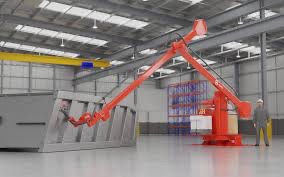
Though Mantis remains in its prototyping phase, State Machinery has placed a binding conditional purchase order - a clear vote of confidence in the robot’s potential. The Louisiana-based firm plans to deploy the unit in the manufacture of hopper barges at its Mississippi River facility. That’s no small task: barge construction requires precise, heavy-duty welding and high reliability, all of which Mantis promises to deliver.
But before any sparks fly in the US, Mantis must prove its chops back home. The purchase hinges on a successful Factory Acceptance Test (FAT) conducted at FBR’s Western Australian headquarters.
The FAT Test: A Trial by Fire (and Steel)
To secure the first $450,000 instalment of the contract, Mantis must weld a sub-assembly of a barge to rigorous technical standards. These include:
A rapid traverse speed exceeding 10 metres per minute
A linear weld speed of over 300 millimetres per minute
Weld quality that passes non-destructive testing, per AWS D1.1 structural steel welding codes
Third-party inspectors will be brought in to verify the results. Should Mantis hit those marks, the remaining payments - $450,000 upon delivery (expected in the second half of calendar 2026) and $90,000 three months later - will follow. FBR is also responsible for installation and training on site in Louisiana.
High Hopes for High-Speed Welding
FBR CEO Mark Pivac is bullish on the Mantis’s performance capabilities, claiming it could surpass the FAT targets by a factor of four. “We have agreed the FAT welding speed based on AWS pre-qualified welding speeds,” he noted. “Our Mantis high deposition welding should be able to weld over four times faster, and we look forward to demonstrating that”.

This isn't mere marketing bravado. If Mantis performs as expected, it could disrupt heavy fabrication sectors like shipbuilding, defence manufacturing, and mining - industries where scale, safety, and consistency trump low-cost labour.
US Partner Sees Big Potential
State Machinery’s endorsement of Mantis carries weight. The company is a prominent dealer of construction and manufacturing equipment in the southern US, and has experience evaluating high-capacity machinery. President Ed Renton said the firm was drawn to FBR’s robotics after observing the capabilities of Hadrian®.
“We are very excited to get our hands on the first Mantis® in the world,” Renton said. “We are pleased to be working with the team to bring their robotic welding technology to the United States to boost our manufacturing capability”.
Diversifying Beyond Bricklaying
FBR’s reputation was built on Hadrian®, its bricklaying robot now used to deliver “Wall as a Service®” to residential builders. But Mantis marks a strategic shift into new verticals. Both systems run on FBR’s proprietary Dynamic Stabilisation Technology® (DST®), which allows precise robotic control in outdoor environments.
By targeting heavy welding jobs, FBR aims to expand its relevance in industrial sectors that have historically resisted automation due to complexity and variable conditions. Mantis could help bridge that gap.
The company has long been seen as a one-product story, but the Mantis order gives substance to its diversification strategy. Although the FAT still looms large as the next hurdle, the contract’s size and structure suggest this is more than a speculative toe-dip. It's a potential revenue stream with international legs - and, if successful, could open the door to other markets facing similar manufacturing bottlenecks.
While it's early days, this deal offers investors a rare concrete milestone. It's not a revenue promise years in the making, nor a speculative partnership. It's a real (albeit conditional) contract with staged payments, performance criteria, and a delivery date. The long lead time means cash won’t hit the books until late 2026, but for a company looking to convert R&D into revenue, the signal is clear: Mantis is more than just a lab project.
And it’s worth noting the strategic implications. This could be the start of a new leg of growth for FBR - one that sits alongside Hadrian but opens access to different industries, customers, and geographies. The Mississippi might just be the beginning.