Nanoveu Takes Flight with Live Drone Trials to Validate Energy Saving AI Chip

10/7/2025
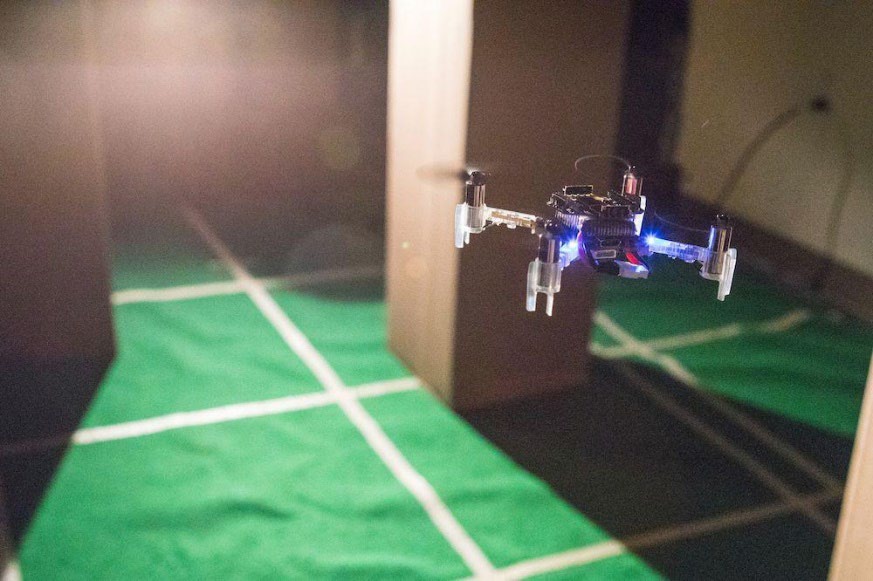
Nanoveu Limited (ASX: NVU) is lifting its drone technology ambitions off the simulation bench and into the skies with the commencement of live flight testing for its AI-driven endurance optimisation chip, ECS-DoT. The move follows highly successful Phase 2 simulations and marks a critical transition from lab to real-world performance validation.
Nanoveu’s wholly owned subsidiary, Embedded AI Systems (EMASS), will launch endurance and autonomy trials using the Crazyflie nano-drone. The goal is to verify whether ECS-DoT can replicate the more than 50 percent flight time improvements observed during simulation — all without altering the drone’s battery, propulsion or airframe.
In simulation campaigns using the Gazebo and ArduPilot platforms, ECS-DoT delivered average endurance gains of 60 percent for quadcopters, 58 percent for hexacopters, and 57 percent for octocopters. These tests were no mere lab curiosities: they involved over 300 campaigns, across multiple drone classes, under varying payloads, wind conditions and flight paths.
The Crazyflie drone, weighing just 29 grams, has been selected for the initial round of flight tests thanks to its modular architecture and strong developer support. Despite its palm-sized frame, it provides a rigorous platform to validate ECS-DoT’s capabilities in tightly constrained environments.
Two key test areas are being pursued. The first will validate real-world endurance improvements under natural conditions, while the second will benchmark GPS-free navigation using a minimal sensor suite — a single monocular camera and inertial measurement unit — powered entirely by ECS-DoT’s sub-milliwatt on-device AI. The aim is to demonstrate reliable indoor navigation, obstacle avoidance, and real-time path planning, all within a minuscule power envelope.
What makes ECS-DoT distinctive is its potential to deliver high-performance control and perception tasks without relying on heavy external compute resources or sensors. It opens the door to autonomous drones that can operate in defence, logistics, and surveillance settings where size, weight and power constraints are non-negotiable.
According to Mark Goranson, CEO of Nanoveu’s Semiconductor Division, “We’ve proven our control stack at sub-milliwatt power; now we are taking it from lab to live environments on a palm-sized airframe. The goal is simple: demonstrate reliable perception and control with the fewest possible sensors, then scale to larger platforms and defence-grade use cases.”
The success of these Crazyflie trials would not only validate Nanoveu’s ECS-DoT chip for current applications but also lay the foundation for broader engagements with drone manufacturers and system integrators. Future stages will evaluate ECS-DoT in larger airframes with more complex mission profiles, potentially enabling multi-chip configurations for advanced autonomy.
The commercial implications are significant. With the ability to retrofit existing fleets and support new drone designs, ECS-DoT could reduce costs, extend mission time, and increase payload capacity — all by tweaking software rather than hardware.
Nanoveu is promising further updates as testing progresses, with potential for strategic partnerships and OEM collaborations on the horizon.